Blog Archive

Showing posts with label science fiction. Show all posts

Monday, March 1, 2021

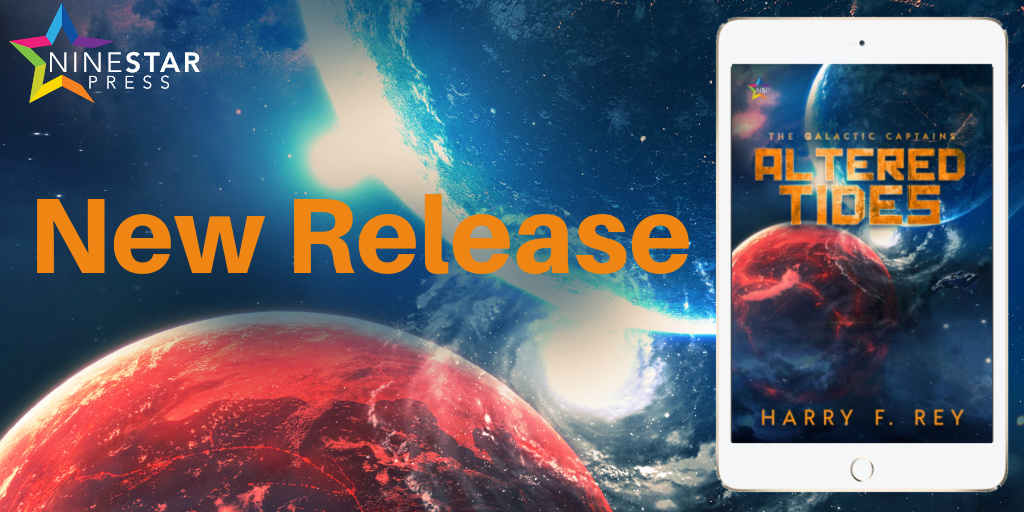
Release Blitz: Altered Tides by Harry F. Rey #LGBTQ #ScienceFiction @Harry_F_Rey @GoIndiMarketing


Title: Altered Tides

Series: The Galactic Captains, Book Five

Author: Harry F. Rey

Publisher: NineStar Press

Release Date: 03/01/2021

Heat Level: 3 - Some Sex

Pairing: Male/Male

Length: 72600

Genre: Science Fiction, LGBTQIA+, Action/adventure, aliens, dark, M/M romance, #ownvoices, pirates, reunited, royalty, sci-fi/futuristic, space, folklore, gods, intercultural, interspecies, merman, war of worlds, religious extremism

Add to Goodreads


Description

A malfunctioning STAR drive strands Captain Ales in a new galaxy. Trapped on a dry, dusty red moon where the rains fall only once every forty years, the restless population barely survives on a teardrop ration of water. Now, the rains are years overdue, and the ruling clerics view Ales as a savior—or a devil. Just as Ales and the She-King’s brother discover a secret the clerics have been hiding for far too long, this world is invaded and torn apart from a most unlikely source.

The blue moon is a world covered in water—water that flows over to the red moon as rain every forty years, thereby drying up the domain of King Sarlord. He’s finally had enough and gathers an army to sail into the sky on the waterspout, land on the red moon, and defeat the god who steals his ocean. His son, Prince Malar, will do anything to avoid staying behind, but even he gets much more than he bargained for when the world as he knows it is swept away on altered tides.

Excerpt

Altered Tides
Harry F. Rey © 2021
All Rights Reserved

The girl lifted her eyes over the dry, dusty horizon bathed in a sandy haze. She blinked through the pain, through the dryness, as she always did. On the shore of an ancient seabed, the girl kicked clumps of dust heaped on the ground like forgotten eggs that had never hatched. They fell apart with barely a touch. There was no water to hold the dust together. No rain fell to fill the sea nor waves to break against the shoreline.

She’d last had water two nights ago. Her father gave her and her four sisters their one allotted teardrop of stale, salty liquid. Two for the baby; although even her mother, Sanhelda, said it was a waste. The baby would not live till the rains came—if they ever did.

Out here by the cliffs along the empty shore, she could at least get away from the cries of thirst that haunted the village throughout the baking days and stuffy nights. Their settlement was not a wealthy one. They lived far from the city with its water vats. Although her father’s brother had returned from the city a few nights before with the news even those had run dry. Rations had fallen to one teardrop per day. Hoarders went without. Soldiers patrolled the dusty streets, but they couldn’t prevent the nightly gatherings outside the palace of the She-King. The people were thirsty, and they were starting to blame the drought on her.

The girl knew this was nonsense. The king did not control the rains. According to the clerics, the goddess Aquina sent the rain from the blue moon in the sky. Although her mother, always a practical woman, said the rains came when their world was perfectly aligned with the blue moon. The king didn’t control the movement of stars and moons, the girl knew that much, nor was the gender of the King stopping the clouds from forming and the rains from filling up the cenotes, the water pits and boreholes, despite what most people now thought.

The girl bent over and scooped a clump of dust from the ground. Gazing into the hazy sky, she rubbed the dust into her cracked lips, soothing the broken skin. The girl wondered what she would do if she were king. She’d never wondered that before she knew a woman had taken the throne.

The rains came once in forty years. The entire system of life on these dusty plains depended on this climactic event. When it did rain, the water filled the vats and boreholes, every drop saved and stored and rationed because everyone knew the water had to last another forty years. Whatever was wasted evaporated in the stifling heat. Whatever was used disappeared into the dusty ground the clerics expressly forbade any person to dig into. Disobeying the clerics meant going a week or more without a teardrop to drink.

The clerics spoke with the gods and calculated each family’s allowance of bottles. Families planned the children they could have and the crops they could grow with the aqua supply front of mind. Donating a little bit extra to the clerics was never a bad idea, though. If the gods pronounced, speaking through a cleric of course, that a person was destined to die before the blue moon rose again in the night sky, the water rations of the condemned individual would be cut to nothing. There was no water to waste on the dying.

It had happened to the girl’s uncle a few years back. He’d had an argument with their local cleric over something obscure that old men passed their time by squabbling over—the price of beets, perhaps. But the cleric won the argument by foretelling her uncle’s sudden death within the month. The family fretted; his wife and children terrified their provider would have a sudden accident. They drastically cut their own rations to keep him alive and at home, even as their crops rotted in the field. Eventually, after much scrambling and scraping and late night discussions on how much the wider family could afford to spend, they managed to sell off a valuable young calf at market in the city in exchange for a bottle of fermented beet wine. The cleric dutifully accepted the sacrifice to the gods, and after returning one night from the sacred temple, his lips stained red and speech slurred from the beet wine, had pronounced to an anxious family that he had interceded with the gods on their behalf, and her uncle would not fall foul to an accident after all. His rations were restored, although their crops went to ruin and the calf they had been counting on to provide milk for three new babies had been sold off for tender meat, but at least her uncle would live. Could live, indeed, now he had water to drink. Such were the petty tyrannies of life under the clerics.

But life was not all terrible. In the thirty-ninth year, a great celebration was held in advance of the coming rains in the fortieth year. A diligent population suffering from a generation of thirst had their rations increased. The clerics and their influential friends would feast and crack open vintage bottles of beet wine as soon the rains would come and replenish their cisterns and water bores.

That had been two parched years ago.

The old king refused to believe anything was wrong and ordered the populace to continue swigging and feasting because the rains could not be far off, the clerics had assured him. That king was dead, and his daughter now sat on the clay throne.

The girl couldn’t believe people could be so shortsighted as to blame someone who was only trying to do her best. The She-King diligently slashed the rations of the clerics and soldiers down to the same as the general populace: one teardrop per day. She’d banned all travel and commerce to prevent thirst, and called on all pregnancies to be prevented while the world remained dry.

Otherwise, there was little else that could be said or done except to gather each night and stare into the clear black sky and pray for it to darken with clouds.

Standing on the bone-dry shore, the girl could only hope. In the distance, something caught her eye. A fiery flash in the sky blazed a trail of false clouds across the blue moon rising from the horizon. She blinked away the haze in her vision, not understanding what she saw, and took a step closer to the edge of the empty sea.

Whatever it was sliced through the dusty atmosphere and left a trail of smoke in its wake. Was this rain? She did not know what rain was meant to look like, but from the stories her parents and grandparents had told her, this didn’t seem like rain.

The dusty rocks underfoot dislodged and crumbled down the cliff edge, and she held back a bare foot in caution. Yet something drew her forward. She needed to know what this fiery thing shining like a metal star was. Had their god Calini returned? Perhaps he had come from the blue moon after forging a peace with the goddesses Aquina and Terrina, and ending this long drought. The gods were fighting, so the clerics had quickly explained as to the reason why the rains refused to fall, and they must all be diligent in their prayers and listen to the men lest the evil goddesses seep into their minds and turn them wicked.

The girl glanced back at the open plain, but there was no one else around. Not in the heat of the day, at least. Biting her broken lip and tasting dust, she decided to climb down the short distance and make her way toward the streak in the sky, tumbling ever closer to the ground.

By the time she got close to the bottom, the bright shiny streak had nearly disappeared from view. As her foot landed onto the cracked ground, a shudder rumbled through the rock. Or even through the very world.

The girl peered forward, tracing the rock line of the other side of the sea shore, looking for lumps or sites of impact. Then she saw it, a plume of dark black smoke snaking into the hazy sky. It looked to be just beyond the cliff edge. Glancing back once more, the girl wondered what to do. What would the She-King do? Would she rush back to the village and alert the sleeping elders? They would just bring more people from the city to come and investigate, priests and soldiers, people who would need to drink.

She could ignore it and turn back now. Pretend like nothing had happened. But her curiosity would never forgive her. And that was a coward’s way out. The She-King would never ignore a mystery such as this.

Suddenly her throat did not seem so dry. Her vision cleared with a flush of cleansing tears, and a spurt of energy rushed through her muscles like she’d just swigged a whole bottle dry. Without trepidation, without fear, the girl put one foot forward on the scarred and empty seabed and walked toward the mystery beyond.

Purchase

NineStar Press | Books2Read
Meet the Author

Harry F. Rey is an author and lover of gay themed stories with a powerful punch with influences ranging from Alan Hollinghurst to Isaac Asimov to George R.R. Martin. He loves all things sci-fi and supernatural, and always with a gay twist. Harry is originally from the UK but lives in Jerusalem, Israel with his husband.

Website | Twitter

Giveaway

a Rafflecopter giveaway

  Blog Button 2

Wednesday, December 16, 2020

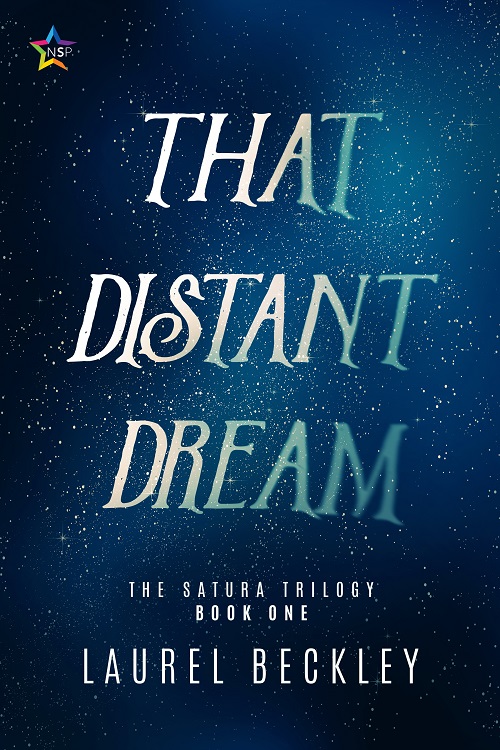
Release Blitz: That Distant Dream by Laurel Beckley #SciFi #LGBTQ @laurelthereader


Title: That Distant Dream

Series: The Satura Trilogy, Book One

Author: Laurel Beckley

Publisher: NineStar Press

Release Date: December 14, 2020

Heat Level: 1 - No Sex

Pairing: Female/Female

Length: 65600

Genre: Science Fiction, LGBTQIA+, science fiction, sci-fi, military scifi, cliffhanger, other-world, military, PTSD, war

Add to Goodreads

Synopsis

After her escape pod is found drifting through debris nearly two decades after the end of the Redelki Wars, Melin is woken from cryosleep to find a galaxy where she no longer belongs. The galaxy has moved on from the horrors she experienced, the experiences that transformed her into a hero while she slept, but she hasn’t.

Alone, broken in mind and body, Melin is slowly pulled to the planet of her ancestors. She just wants a fresh start. A chance to end the dreams plaguing her sleep. A chance for answers. For new beginnings. For a life lived in oblivion where no one knows her name or what she did.

But Satura is a planet at war. And there are no fresh starts for heroes.

Excerpt

That Distant Dream
Laurel Beckley © 2020
All Rights Reserved

The shuttle jerked violently to the left, shuddered as both engines made the distinct whine of crystal overload, shrieked, and died.

Someone in the back screamed as the craft tumbled, rolling wildly through the atmosphere.

Melin gripped her armrests, squeezed her eyes shut as she willed her breath to remain steady. Hyperventilation would kill her faster.

She tried focusing on what that quack psychoanalyst claimed were “soothing” mantras as the onsetting gravity of reentry sucked her into her seat at a pace faster than the cheap civilian gravity suit could compensate. Breathe, breathe, breathe.

A distant corner of her brain—the one not occupied with breathing, muscle tension, and avoiding G-LOC—remembered a military-grade ship suit wouldn’t have had this problem. Her old space armor would have allowed her to carve a hole out of this blasted shuttle and free dive planetside. She sucked a tight inhale through clenched teeth, chest burning. Think of the positive.

Then she remembered she’d never link in with a set of space armor ever again, and she was back where she’d started.

On a free-falling shuttle with a one-way ticket to the ground.

The shuttle flipped, gaining a moment of antigravity that triggered a spate of relief—and retching and sobbing and fervent prayers—for its passengers.

The shuttle rolled again, nose pointing down.

Melin’s vision tunneled, graying at the edges.

I will not die like this.

A jolt of energy passed through her, setting her fingers on fire and dissolving her vision into sparkling blue light. An engine sputtered, hissed, and restarted with a ferocious roar.

As quickly as the onset had begun, the shuttle leveled in its descent, catching before it hit too steep of a reentry and turned them into a smear of fire and ash across the sky.

The shipboard gravity slackened to a bearable weight, and Melin heaved in a grateful sigh. Her chest hitched as she inhaled too far, and she leaned forward, instinctively slapping her chest to release the five-point harness as her lungs burned and shuddered with a coughing fit. The gravity was still too heavy, and she tumbled forward into the seat in front of her, wheezing.

“You all right, sero?” her seatmate asked with all the sincerity of a corpse. His gray face looked like it had aged thirty years in ten seconds.

Melin waved a hand between coughs, focusing on breathing. In and out and in and out, settle your chest, you aren’t going to die. You just survived a weird shuttle mishap. A little coughing fit is nothing. And when you get your shit together, you can tell this asshat to address you as an adult, not a child.

Eventually, her inhales matched her exhales. Unthinking, she wiped her mouth with her left hand—the flesh still new and tingly from the regen. Fuck. Everything felt new and fresh and raw. She sucked in a rattling breath.

The last set of skin grafts had done wonders to fix the burn scars. She looked like new. On the outside. Her insides were old, brittle, and breaking with every wracking cough, every interminable second. At least she had control of her bodily functions again. Melin shook her head and rubbed her temples with her right hand, feeling the calluses of her finger pads brush against her forehead. She carefully tucked her left hand against her side. A cobbled together golem, that’s what she was now.

“It’s like this on every jump,” her seatmate said. He straightened in his seat as if trying to gather his composure. Melin grimaced. Of course he hadn’t passed out.

Melin ignored him, leaning into her seat and fumbling with the straps.

He had introduced himself as Diplomatic Corpsmember Undersecretary Obidiah Calderon when they’d first boarded after he’d squeezed his body into the jump chair beside hers. His thigh touched hers even now, oozing over the seat. He’d been assigned to a backwoods planet of minor significance that would make or break his career. As if to emphasize his importance and larger stature, his thighs were spread wide, invading her space and pushing her further into the cramped window seat.

“Almost like the planet doesn’t want us here,” he added when he had obviously failed to pique her interest. “But we still land safely—80 percent of the time.”

She nodded absently and turned to the windows, which were untinted now they were in the upper atmosphere, revealing more gray clouds. At least this shuttle had windows. Tactical combat shuttles had no windows, and—Melin shook her head, trying to physically toss aside those memories. Those times were long past, and she was on a clean slate.

What clean slate she had left.

A fresh start, she’d resolved to think of it when she’d boarded the starship to this sector of Intergalactic Association of Sentient Species space.

A fresh start, take eleven or so.

She’d lost count somewhere around clean slate number five.

But there was no true fresh start for someone who’d received the highest awards in the IASS not once but twice. It had been two years since she’d woken from cryo, and the novelty of her circumstances had worn off. At first, she’d been shepherded from place to place; the long-lost treasure recovered. Although it certainly hadn’t helped IASS fleet when she’d punched that reporter immediately upon her release from the swank veterans’ hospital they’d stashed her in during her long recovery. And the state dinner where she’d spazzed when the servers popped the bubbly. One of the poor busboys wouldn’t walk ever again.

The brass stopped trying to mold her into a puppet, had stopped trying to point her along a destined path. Reporters stopped following her when they’d realized there would be no story.

She was all past with no future. She was even ruined for further military service. No one wanted to work with an operator who couldn’t even use a suit. Who couldn’t do five-dimensional math. Who couldn’t take an implant ever again.

Melin closed her eyes, forehead resting against the cool plex-glass.

She’d failed at every single thing they’d set her to since her waking.

Now, more than ever, she wanted nothing more than to just slide off into the background. She wanted to be something less than a footnote in history.

She wanted to be nothing.

Because without an implant, she was nothing.

Cranial implants had been enhancing humanity for generations. Nearly everyone had one—generally put in at birth or when they took their qualification exams upon entering adulthood. Few people failed to take an implant—although there were several religions focused on maintaining the purity of the human body.

Unimplanted people were rare because there were no jobs beyond the most menial for them. Entire families would scrounge for years for the cheapest model to implant their children and send them to school for a better future and for their children to turn around and raise up their parents in return.

But no one at the upper levels wanted to chance the story of the heroine of the Redelki Wars mopping a floor—and she had no desire to return to her long-fled homeworld.

So, during those nine or ten previous fresh starts and throughout the year of rehab she’d…floated. Unable to face her future, to accept reality, she’d turned herself off. Half-drifting, half-asleep until the only time it seemed she was really awake was while dozing, and even then, she’d wake unrested, troubled by the damn dreams.

They began in cryo-sleep.

The shrinks had insisted she hadn’t—couldn’t have—dreamt, that dreams were impossible because she had been effectively dead, but she had. She had dreamed, those long years as an ice cube. Weird dreams, muddled and glorious and filled with swords and dragons and monsters and creatures from fairy tales and nightmares. Dreams that mixed her life with her great-grandmother’s stories, but it had all been so real.

They had been more real than the monotonous reality of flex this, good, now bend your index finger, good, rotate your wrist, good. Of sterile gray walls and the hot-metal stench of recycled air.

The dreams had faded a couple months after she first woke. When she’d regained words in a language her therapists understood. But she kept seeing flickers of people she had never met in real life but felt so familiar out of the corner of her eyes.

They’d remained intermittent during the never-ending horrors of the grafts and regrowing her arm and the physical therapy, but after she’d been discharged, they grew more persistent.

Months, weeks apart, then quicker, every night, pulling her to a place she’d known only from childhood stories.

Satura.

With nothing else left than the desire to stop the dreams, she had set her sights here, and who would have refused her? She was a hero. The hero. Besides, at that point the IASS wanted her out of their hair. She was a liability, an embarrassment waiting to happen.

Satura had seemed the best place to send her.

It was the end of the line in every sense.

Purchase

NineStar Press | Books2Read Universal Link

Meet the Author

Laurel Beckley has been writing ever since she started her first novel the summer before eighth grade—a hand-written epic fantasy catastrophe that has lurked in her mind and an increasingly ratty college-ruled notebook ever since. 

She is a writer, Marine Corps veteran, and librarian.

Website | Twitter

Giveaway

a Rafflecopter giveaway

  Blog Button 2

Wednesday, April 15, 2020

Release Blitz: Like the First Moon Landing by Matthew J. Metzger


Title: Like the First Moon Landing
Series: Roche Limit, Book One
Author: Matthew J. Metzger
Publisher: NineStar Press
Release Date: April 13, 2020
Heat Level: 1 - No Sex
Pairing: Female/Female
Length: 44800
Genre: Science Fiction, LGBTQIA+, science fiction, lesbian, intersex, trans, discrimination, mystery

Add to Goodreads

Synopsis

Stranded and injured in deep space, Maggie McLean has one chance at survival—the ship drifting off her starboard side, refusing to answer her distress calls. The ship the whole universe has been looking for.

Maggie most of all.

The Swift vanished without so much as a cry for help. There have been endless conspiracy theories, from aliens to government corruption to wormholes leading to other dimensions, but one thing was certain. She was gone, with all two hundred and thirty-six crew members on board. Including Maggie’s wife.

Maggie’s going to figure out what happened come hell or high water—but she might not like what she finds.

Excerpt

Like the First Moon Landing
Matthew J. Metzger © 2020
All Rights Reserved

Pain.

It was the first thing Maggie knew. A dull throbbing, starting in the fat weight of her brain at the base of her skull and rippling outwards like stones into still water. There was a stabbing sensation in her shoulder, and when she opened up her lungs to breathe, they spasmed and choked.

Everything hurt.

But pain was good, as Ma used to say. Pain was proof of life.

“You and me, we’re like the first moon landing.”

Maggie ran through the rest of Ma’s wisdom. She flexed her toes in her boots. Fingers in her gloves. Gingerly tensed her neck, and roll—

She stopped dead at the wave of intense nausea and took a moment to just breathe through her nose. Don’t be sick. Don’t be sick. When her stomach eased from a violent jerking to a sluggish, sinister churn, she carefully eased her hips and chest over, perfectly in line with one another, and eased into a recovery position on the metal grating.

The grating.

Urgh, no wonder she hurt. She’d been in the pilot’s seat when the asteroid—or whatever it was—had hit. And belted in too.

“You’ll touch down to feel a little rough ground…”

Her lungs still didn’t want to breathe. The band around her diaphragm was only getting tighter. There was nothing else for it—she needed the drugs. And her medical kit was in the top drawer under the console, so she’d have to get up. Sooner rather than later.

Maggie reached up with her left arm. It was like moving through water or sludge, and her body felt almost drunk on the chaos of clamouring nerves all bidding for her attention first. She didn’t dare open her eyes just yet, so groped blindly above her head. She found the bunk frame. Hell. She’d been thrown from the pilot’s chair to the gap under the bunk, and she was still alive to know it. Suddenly, the pain didn’t seem so bad. Better than a broken neck.

“Pain is proof of life.”

She grunted and turned her boots towards the wall. Braced her feet there and swallowed against the vomit rising up through her chest and neck.

“Pain. Proof.”

She pushed.

The sound of her body sliding out from under the bunk was like a landslide off Mount Olympus. The nausea won out, and Maggie shoved herself up on shaking hands just in time to throw up a gutful of stringy, pink-tinged bile onto the grating. Her stomach punched into her diaphragm like a living thing, furious and intent on revenge, and her head burst like a firework.

“—I’m…here…”

The next thing she knew, the smell of sick was in her hair and nose, and there was a damp patch on her cheek.

“Fuck,” Maggie hissed and pushed away from the pool.

The blackout must have been a little while. The pain was worse, but the puddle of sick cold. The fog in her head had eased a little. She could think better. And breathe better too—mostly.

“Get it together,” she muttered and cracked open her eyes.

It was dark. Blissfully, soothingly dark. The emergency lighting was a low blur of soft blue, almost comfortable, like a hot-water bottle on cold winter nights. Maggie fought to control her quivering limbs and sat down on the bunk with a thump. It jarred, a shock of pain bouncing up her spine, and she leaned forward, opening her mouth, and spat another mouthful of pink vomit into the gap between her boots.

“And you’re out looking for worlds unseen.”

First things first.

She was injured. That much was obvious. But no broken limbs or ribs. There might be an internal bleed in her stomach, but if there was, there wasn’t anything Maggie could do about it. Her head felt like a mess though. Gingerly, she reached up and patted her hair. She had shaved her head when she’d gotten her first shutter job, and never grown it out to more than an inch or two of tight, springy curls since. Which made it easy to find the savage cut, the knotted wad of wet hair keeping a lid on it, and the near-dry fountain of blood that had gushed down the back of her neck and shoulders.

“Great,” she muttered, but at least it explained the pain. Her skull felt intact. Lucky, if she’d met the bulkhead head first.

Her neck was stiffening rapidly. Whiplash. A starburst of pain kept reappearing in her shoulder joint—she’d probably briefly dislocated it when the belt had snapped and flung her across the cockpit—and she could feel, even if she couldn’t see, the violent bruising all across her right side. But just bruises. A bit of bleeding. Nothing that wouldn’t fix itself, given enough time.

All in all, she’d live. Probably.

“You and me, we’re like the first moon landing.”

So, on to the second point. Would her ship live?

Maggie was a shutter. The space equivalent to long-haul truck drivers. She piloted single-crewed transport and haulage ships between stations and colonies, on the move for weeks at a time—but at least the antisocial lifestyle attracted good pay, especially for someone without the proper papers like Maggie. She only had a B license, so she wasn’t qualified to land on moons and planets yet, but she’d done her theory and was booked in for her tests on Barrane when she got back from this run. It was a lonely but very well-paid job—and lonely and well-paid was just what Maggie had wanted when she’d applied in the first place.

But lonely in space could be fatal.

Especially lonely in space on a shortcut.

If the ship was damaged beyond her ability to repair it, or she couldn’t get back to the proper trade route, then she would die out here. The delivery wasn’t due for another two months. And she’d been taking a shortcut through uncharted territory to make it in time after having to replace two of the solar batteries at Barrane. One more late delivery and Maggie would be fired. And she was a good pilot. She’d been flying for years on her own without any incidents at all. She could handle a measly shortcut, right?

Apparently not.

Right now, going on the credit seemed like a much better idea than this stupid shortcut. Maggie had been regretting it from that first crackling comms call.

“You’ll touch down to feel a little rough ground…”

She squinted across the cockpit at her pilot’s chair. The top half of the belt was still attached, the bottom half missing. The chair was crooked, but upright. All the lights on the console were flashing in random patterns, and the viewscreen was out. The comms system was blinking, waiting for her reply.

Most insultingly, the fluffy dice Sam had bought her as a joke when she’d gotten her license were gone.

“Fix it. Fix it, then find the dice.”

She lurched up from the bed.

The grating spun underneath her. The cockpit was barely ten feet of space between bunk and chair, but she fell most of it. She caught at the chair with both hands, and her knees collapsed as the whiplash reminded her that falling in any way was an intolerably bad idea.

When she managed to open her eyes again, a red mist clouded her vision, and the sharp taste of iron lingered on her tongue. Her chest tightened, and the black spots of panic and oxygen deprivation clustered around the edges of her eyes.

The drawer was right there.

“…but I’m right here where I’ve always been…”

She dropped into the chair just as her fingers closed around the plastic tube on top of her medical kit, and that first spray in her mouth and throat tasted like foul ambrosia. At the second, she aspirated it properly and felt her chest beginning to open up again.

“…and you’re out looking for—”

With a smirk, Maggie cancelled the stereo. Silence swept in, as soothing as the low light. Trust the damn stereo to keep playing even through—whatever that had been.

Purchase

NineStar Press | Amazon | Smashwords | Barnes & Noble | Kobo


Meet the Author

Matthew J. Metzger is an ace, trans author posing as a functional human being in the wilds of Yorkshire, England. Although mainly a writer of contemporary, working-class romance, he also strays into fantasy when the mood strikes. Whatever the genre, the focus is inevitably on queer characters and their relationships, be they familial, platonic, sexual, or romantic.

When not crunching numbers at his day job, or writing books by night, Matthew can be found tweeting from the gym, being used as a pillow by his cat, or trying to keep his website in some semblance of order. You can find Matthew on Twitter.

Giveaway

a Rafflecopter giveaway


Blog Button 2

Wednesday, January 22, 2020

Book Blitz: Out of Time by C.B. Lewis


Title: Out of Time
Series: Out of Time, Book Five
Author: C.B. Lewis
Publisher: NineStar Press
Release Date: January 20, 2020
Heat Level: 3 - Some Sex
Pairing: Male/Male
Length: 113100
Genre: Science Fiction, LGBT, science fiction, time travel, gay, bisexual, asexual, British, dirty talk, family drama, PTSD, panic attack, unending innuendo and teasing

Add to Goodreads

Synopsis


For Ben Sanders—traitor, thief, and temporal orphan—time is running out.

After three years as a fugitive, with the police task force led by Lysander O’Donohue and Jacob Ofori hot on his heels, Ben has to resort to desperate measures to evade capture and find the key to locating his missing father, lost in time for over two decades. With secrets and conspiracies at every turn, the net grows ever tighter around him.

Haunted by the people he betrayed, the loved ones he left behind, and the lives he ruined, it’s too late to stop now. But no matter what Ben does, there’s no escaping his past.

With this exciting conclusion to the Out of Time series, it is recommended to read the first four books for full enjoyment.


Excerpt


Out of Time
C.B. Lewis © 2020
All Rights Reserved

Chapter One

The house was unnaturally quiet.

It looked the same as usual: portraits of a family—mother and baby, father and toddler—on the walls, a scatter of Lego and jigsaw puzzles on the floor, a forgotten coat slung over the bannister at
the top of the stairs.

The man walked onwards towards the staircase.

It was too quiet.

All he had to do was call out and break the silence, but he couldn’t.

Run and hide.

That was what his dad had told him. He had done what he was told.

The front door was cracked open, a thin slice of pale morning light cutting across the patterned tiles on the hall floor. It stretched on towards the lab, which was impossible. The sun was too high for it to stretch so far.

Something wasn’t right.

The stairs creaked underfoot as he crept down. The tiles in the hall were cold. His clothes were soaked. He didn’t remember why. They were wet, and he was cold, and it was all too quiet.

He saw—did he?—the body. A sheet. A shoe on a foot from under it. He saw it. A glimpse. He walked closer, and the sheet was still there. He reached out and grabbed the sheet to see the face of the one who did it.

There was nothing there. No one. The sheet fell from his numb fingers, vanishing before it hit the floor, and he walked onwards.

The door was open, no longer secret. They had cleaned the bloodstains, but he’d heard them talking quietly when they thought he couldn’t hear, and the handprints were back, smeared on the wall.
Whose? He didn’t know.

Light shone up from the basement. The walls were white where they weren’t red. It wasn’t silent down there. The electric crackle of power hummed around him as he made his way down. It should
all have been bigger. When he was there the first time, it all seemed so much bigger. He remembered the crackle, too, and knew what it meant.

Their secret, something no one had ever known.

He crossed the floor of the laboratory, ignoring the computers and the information all over them. The sound was coming from the next room, and he knew what he was going to see.

The temporal gate connected, blazing with light. The man standing before it, barely more than a silhouette.

“We’re running out of time.”

The voice was familiar, but it was wrong too, not the voice he remembered. Too many years without. Too many years of his memories being worn away. He couldn’t remember it now, not exactly, not the
intonation, not the lilt or the accent.

He tried to speak, but his throat was closing up. He reached out towards his father, trying to catch him before he did what he always did. His fingers passed through his father’s shoulder as if it was nothing more than a shadow; then his father stepped through the gate. The world blazed white, dazzling him.

“No!” He ran towards the gate only to collide with a solid wall. Wall on all sides. Enclosed. Trapped. He was somewhere safe. Safe and closed and dark and alone until Dad came for him. The door was sealed and there was no way out, and in the dark he screamed—

Ben Sanders jolted, sitting bolt upright, panting. Iron bands squeezed his chest. He twisted frantically towards the glowing nightlight on the stool beside his bed. Staring at it, he counted down from thirty until his heartbeat evened out, and he could breathe again. He always kept the lighting low throughout the studio in case the nightlight failed. A shaft of white cracked through the ajar bathroom door. Not dark. Never dark.

His sheets clung to him, soaked with sweat. He pushed them aside and got out of the bed on unsteady legs. It took more effort than he liked to make it to the bathroom. He sank to the floor to sit by the toilet. The porcelain was cold as he propped his elbow on the seat, his fingers sinking into his sweat-matted hair.

Every night, it was getting worse. He knew why. How could he not? With every day that went by, he took another step closer to the day that would ruin his life. Time, time, time. That was what it came down to.

His stomach clenched, and he vomited, acid burning in his throat.

Any day now.

He got up and filled a glass of water at the sink. His reflection seemed more like someone half-dead, pale, with deep shadows beneath his eyes. He needed to rest, but not now. Not with his heart
still pounding and the faint echo of his father’s voice lingering in his ears.

There was still so much to do.


Purchase

NineStar Press | Amazon | Smashwords | Barnes & Noble | Kobo

Meet the Author

C.B. Lewis is small, Scottish and writes pretty much anywhere, any time. She loves to travel and tends to bring home at least four new plot bunnies from every trip she goes on. She’s very excited to continue the adventures of the Out of Time series.


Facebook | Tumblr

Giveaway

a Rafflecopter giveaway


Blog Button 2